


Popular Articles
- Hair Loss Products - 25 Natural Treatments
- Advecia Supplement Facts
- Medications That May Interact with Advecia
- Vitamin Deficiency and Hair Loss - The Facts!
- 14 Vitamins for Hair Loss & Thinning Hair
- Receding Hair & Beta Sitosterol
- Biotin for Hair Loss - Should You Try it?
- 6 Amino Acids for Hair Loss
- Sugar Linked to Increased Hair Loss Risk
- Hair Loss Vitamins for Women
- More Articles ...
 Does Rogaine Work for Women?In This Article
Rogaine is the first hair loss product to be approved by the FDA. It contains minoxidil, a drug once used to lower high blood pressure. Rogaine for women contains the same drug but at a lower dose than Men’s Rogaine. Is this lower dose effective for preventing hair loss and stimulating hair regrowth in women? Read on to find out how you can get the best out of Women’s Rogaine.
*Note: ProgressiveHealth.com does not carry Women's Rogaine. The following review is simply for informational purposes: How Effective is Rogaine for Women?While the 2% minoxidil supplied in Rogaine for women is effective for 30% of men, it is more effective in women. In one study, 60% of the women who were given the 2% minoxidil formulation experienced some hair regrowth although only 20% experienced significant hair growth. Therefore, Rogaine for women is only effective for some women. However, the alternative is antiandrogens or oral contraceptives both of which can affect hormonal balance. Because these oral drugs can cause significant side effects, doctors prefer prescribing topical minoxidil products such as Rogaine. However, where the 2% minoxidil solution fails to work, some women report improved results with the 5% minoxidil solution. However, this is an off-label use of Men's Rogaine, and Rogaine for women is only available in the lower concentration. As long as the limitations of Rogaine is understood, expectations for new hair growth can be well managed. Minoxidil (and Rogaine for women) is more effective if the hair loss does not cover a large area of the scalp. Also, its effectiveness reduces the longer alopecia is allowed before treatment is begun. For example, after five years of hair loss, the chance of success with Rogaine is severely reduced. This is because Rogaine stimulates hair growth but if all the hair follicles are destroyed, there are no cells to stimulate. Yet another limitation of Rogaine is the need for constant use. The effect of minoxidil on hair growth wears off within 30 – 60 days after its use is stopped. This means that hair loss resumes when Rogaine is withdrawn and, therefore, the product has to be applied for the lifetime of the user. Minoxidil fails to "cure" hair loss because it only supports hair regrowth by increasing the number of nutrients getting to hair follicle cells and by increasing the population of these cells. Because it does not reduce the amount of DHT or 5-alpha-reductase (the enzyme that converts testosterone to DHT) accumulated around hair follicles, the rate of hair loss soon exceeds hair growth after Rogaine is stopped. Hair Loss in WomenHair loss is also known as alopecia. It is the collective term for describing a net loss of hair from the scalp or body. Typically, hair is always being lost and replaced in a cycle that ensures no changes in the amount of hair covering the body. However, when hair loss occurs, more hairs are being lost than new ones replacing them. We lose about 100 hairs every day. However, when daily hair loss exceeds this number, it can be difficult for the body to replace them. Losing more than 100 hairs per day is a definitive sign of alopecia.
Androgens attack hair follicle cells and kill them off. When this happens on the scalp, it can turn whole areas of the scalp hairless as the cells producing hair strands die off. Hair loss due to androgens is often a hereditary condition that runs in some families. It can affect both men and women. However, the pattern of hair loss differs between men and women. Male-pattern hair loss begins from temples. The hair thins from the sides before the other areas of the scalp. On the other hand, female-pattern hair loss starts with hair thinning from the front of the scalp. Of the drugs used for treating alopecia, minoxidil is the most commonly prescribed and it is effective for both male-pattern and female-pattern hair loss. What is Rogaine?Rogaine is a popular brand of hair loss products. It comes in two different formulations: one for men and the other for women. Rogaine contains minoxidil, the first compound approved for treating alopecia by the FDA (Food and Drug Administration). Although there are now other brands of minoxidil, Rogaine was the first hair loss product formulated with this compound.
This hair loss treatment is available as topical solutions of varying volumes. It is meant to be applied to the scalp twice daily. Each application should be no more than 1 ml. of the product. Unlike some topical formulations, Rogaine for women is not greasy but comes with the consistency of water. Rogaine should only be applied to the scalp and it should not be used to treat hair loss in other parts of the body. If it comes in contact with the eyes or other mucosal surfaces, it should be washed off thoroughly with water. Once applied to the scalp, some of the Rogaine is absorbed into the blood. Although only a little of the active ingredient is absorbed, Rogaine can still cause a systemic effect. For example, it should only be used with caution by women with heart disease. Rogaine for women does not work for everyone. However, it is particularly effective for those with hereditary alopecia caused by high levels of androgens such as testosterone. This hair treatment product should not be used by those experiencing sudden and quick hair loss, those with a family history of alopecia, and those experiencing hair loss after childbirth. Rogaine should not be applied to an infected, inflamed, or reddened scalp and it should not be mixed with other topical medicines while applied on the scalp. For safety reasons, Rogaine should not be used by pregnant and breastfeeding women as well as anyone younger than 18 years. Although it is well-tolerated, Rogaine does have some side effects. The manufacturer recommends the withdrawal of the product for any of the following reasons:
Rogaine does not work for everyone and it should be abandoned if there is no sign of hair regrowth after 4 months. Most users who find Rogaine effective report the first signs of hair regrowth as early as the first month of use. However, it should be noted that Rogaine causes hair loss initially before stimulating hair growth. Therefore, the increased shedding of hair experienced in the first weeks following the use of Rogaine is a good sign. It happens because the new hair growing out pushes the old ones out of the skin pores. A Brief History of RogaineRogaine is the first Minoxidil topical preparation for hair loss to be introduced. It was also sold as Regaine in Europe. Rogaine has its foundation in Loniten, an oral anti-hypertensive drug. While Loniten is rarely used to treat high blood pressure today, Rogaine is still the most popular hair loss remedy. The effectiveness of Minoxidil in stimulating hair growth was discovered as a side effect of Loniten. Those who were placed on the anti-hypertensive reported significant hair growth and thickening of their hair. This chance discovery has since changed modern science's approach to hair loss treatment. However, the other side effects of Loniten especially those affecting the cardiovascular system made the oral preparation unattractive for long-term hair loss treatment. To bypass the side effects while retaining the efficacy of Minoxidil, it was reformulated as a topical solution that can be directly applied to the scalp. Rogaine 2% topical solution was introduced in 1988 as a prescription medication to treat hair loss in men. By 1992, the same concentration of Rogaine was approved to treat hair loss in women. After more than a decade of being the only topical Minoxidil preparation available for the treatment of hair loss, Rogaine's patent expired in 1996. Soon other more Minoxidil liquid formulations appeared under other brand names. Over the years, Rogaine was improved to provide even bigger gains. Of these, 3 improvements are particularly noteworthy:
After the release of Rogaine 2% topical solution, studies investigating its effectiveness discovered that it stimulated hair regrowth in 30% of men. While women have a higher success rate with 2% Rogaine, it was clear that men need something stronger. 5% Minoxidil solutions were tested and found to double the success rate of the 2% solution in men. Soon enough this concentration became the standard in men's topical Minoxidil formulation and by 1997, Rogaine 5% Extra Strength solution was introduced to combat hair loss in men. The 2% Rogaine is still the one offered to women.
By 1996, there were enough safety and efficacy studies as well as years of Rogaine in the market for the medication to be taken off the prescription list. Today, anyone can buy and use Rogaine without a doctor's prescription since it is now sold as an over-the-counter medication. This alone has made the hair loss product available to a lot more people. It is also a stamp approval indicating that Rogaine is safe for everyone to use.
While the 5% topical Rogaine solution was effective for reversing hair loss in men, some users develop contact dermatitis to the drug. To avoid this side effect in people with sensitive skin, the 5% Rogaine foam was introduced in 2006. Rogaine foam is even more effective than the solution. It stimulates hair regrowth in 85% of men after 4 months. It is available as an over-the-counter medication too. Men's Rogaine Foam can be applied easily; it melts at room temperature and is completely absorbed through the skin, and it dries quickly.
MinoxidilMinoxidil is another popular ingredient for well-known products in the hair loss prevention and hair regrowth industry. This was an interesting find because the original use for Minoxidil was for the treatment of high blood pressure. Side effects, however, included an increase in hair growth in many cases. While one time a strictly prescription only medication, Minoxidil is now available over-the-counter. About MinoxidilMinoxidil was first introduced as a prescription drug taken orally for the treatment of hypertension. However, the very common side effect of new hair growth was reported. Soon, the drug's potential in the treatment of hair loss became evident and has even now overshadowed its first use in lowering blood pressure. Minoxidil works to relieve hypertension by acting as a vasodilator. This means that it opens and relaxes blood vessels enough to reduce the force with which blood is pumped through them. This same vasodilatory property is responsible for the effectiveness of Minoxidil in stimulating hair regrowth. Minoxidil causes vasodilation of the blood vessel by releasing nitric oxide which is known to widen the diameter of the vessels. As an antihypertensive, Minoxidil (sold as Loniten) is not the first-line drug in the management of high blood pressure. This is because oral Minoxidil produces some serious side effects on the circulatory system. Because of its systemic side effects, when it was formulated for hair loss treatment, Minoxidil was presented in topical preparations to be applied directly to the hair. While Rogaine was the first such preparation of Minoxidil, other brands of the medication are now available and sold as over-the-counter products. For those who struggle with androgenic alopecia, Minoxidil may be the right hair regrowth method to use or at least try. There are a few basic things to know about this blood pressure medication turned hair growth stimulant.
How Minoxidil WorksThe ability of minoxidil to stimulate hair regrowth was discovered while it was still a drug candidate for treating hypertension. Clinicians soon discovered a common side effect of the drug: hair growth. While patients were placed on minoxidil, they experienced the darkening and thickening of body hairs, and some even experienced quite significant hair growth. What was an unwanted effect for some became the big selling point for people experiencing hair loss? Soon minoxidil was discontinued as a drug for treating high blood pressure and re-introduced as a drug for reversing hair loss. The 2% solution of minoxidil was the first preparation of the drug to be marketed for hair loss. This topical solution was found effective for men and women. However, further studies show that the 5% minoxidil solution was even more effective as a hair loss treatment, especially for men. As an antihypertensive drug, minoxidil works by dilating the blood vessels. Although it is not fully understood how minoxidil increases hair growth, the same effect is believed to contribute significantly to its ability to stimulate hair regrowth. As a vasodilator, minoxidil releases nitric oxide (a known vasodilator itself) which widens the blood vessels allowing for improved blood flow to specific parts of the body. Because Rogaine is a topical product meant to be applied to the scalp, the minoxidil it contains releases nitric oxide, the vasodilator, in the skin of the scalp. Therefore, this topical application of minoxidil improves blood flow to the hair follicle cells. Increased blood circulation to these cells means that they are supplied with more oxygen and nutrients for their growth. Other known effects of minoxidil which may also contribute to hair regrowth include its ability to polarize cell membranes and open potassium channels as well as its positive effect on prostaglandin. Through the last effect, minoxidil can increase the number of new hair follicle cells. The combination of these effects causes the shortening of the telogen (resting) phase of the hair growth cycle and the lengthening of the anagen (growth spurt) phase. This means that the minoxidil in Rogaine provides more time for hair growth and less time for hair loss. Minoxidil and Hair GrowthBefore Minoxidil was available as a topical hair loss solution, it caused the fortunate side-effect of new hair growth in those taking Loniten for hypertension. Minoxidil also caused the darkening of fine hair all over the body. These effects are, however, not long-lasting. To stimulate hair growth, topical Minoxidil preparations are most effective in people under 40 years and who has just recently started losing hair. Minoxidil is not a cure for baldness since hair loss resumes within 2 months after Minoxidil use is stopped. Minoxidil does not stimulate considerable hair growth in receding hairlines. However, it is more effective in promoting hair growth at the crown. Furthermore, Minoxidil is more effective when used in small areas rather than large areas of hair loss. 2% solution of the medication is found to be effective in reversing hair loss in 30% of male patients. Female patients, however, have much success with this concentration. 5% Minoxidil preparations produce a higher success rate and are currently the preferred formulation for men. Apart from stimulating new hair growth, Minoxidil thickens existing hair shafts making even sparse hair look thicker. While the exact mechanism of Minoxidil's role in hair loss reversal is not completely clear, two possible pathways have been proposed for its activity on the hair. First, Minoxidil releases nitric oxide which is a known vasodilator in the body. This effect is further helped by the drug's action on the potassium channels of the cell. Therefore, Minoxidil causes the blood vessels to dilate and transport a greater volume of oxygen and nutrient-rich blood to hair cells. On the other hand, it opens the potassium channels in cell membranes. For hair follicle cells this means that they are perfused with more blood rich in oxygen and nutrients, and these nutrients can easily flow into the cells. The combination of the two effects increases hair follicle cell metabolism which leads to an increase in the production of new hair. Secondly, Minoxidil directly stimulates the hair follicle growth through a pathway involving prostaglandins. It also produces an increase in the number of papilla cells. These two pathways combine to shorten the telogen phase and prolong the anagen phase of the hair growth cycle. The net effects are increased hair growth and thicker hair strands. Minoxidil FormulationsMinoxidil is available both in 2% and 5% topical solutions. While the 2% solution stops hair loss and encourages hair regrowth in 30% of men using it, the 5% solution has a success rate of 65%. The 2% solution is prepared with alcohol while the 5% solution uses propylene glycol as a solvent. Therefore, some may find out that the higher concentration makes their hair sticky and irritates the scalp. While there are topical Minoxidil preparations with higher concentrations of the active agent (up to 15% Minoxidil solutions), these are not more effective and may even pose a health risk to users. Minoxidil is also available in a spray foam form prepared in alcohol and glycerin base. This formulation is provided for those who experience contact dermatitis with Minoxidil liquid preparations. When applied to the skin, it melts at room temperature. Foam Minoxidil contains 5% Minoxidil and is just as effective as the liquid form.
Pros and the ConsBefore deciding on a hair loss product or treatment for your hair loss prevention or reversal, it is a good idea to know the potential pros and cons of each alternative you have. Minoxidil Pros:
Minoxidil Cons:
Potential Side EffectsIt is also important to know what you may be getting into when it comes to side effects. This is important so you know what to watch for and also what issues you may need to discuss with your doctor before agreeing to use it.
Examples of Reviews from Some Minoxidil Users A good majority of consumers who used products containing Minoxidil to help treat hair loss had good news to report. There were, as expected, a certain percentage of users who claimed there were no results. The problem with this is it is difficult to determine if the users followed the twice a day regimen required to make this a successful hair regrowth treatment. In general, users of this product shared some similar experiences. For example, many users could certainly report a good amount of regrowth but did feel the new hair was not as thick as their original, natural hair. Also, many hair loss sufferers using this product reported actual filling-in, along the hairline. Not to mention a consensus seemed to be that the results began to be noticed earlier than expected. Since it can take at least half a year to see results those who were seeing promising results within two and a half to three months. How to Improve the Effectiveness of RogaineAlthough Rogaine is only effective for about half the women who take it, there is a way to increase the percentage of those who benefit from the product. By combining topical Rogaine with oral hair loss supplements it is possible to increase your odds of experiencing new hair growth. However, selecting the proper supplement is key to providing this benefit. One example of an effective hair loss supplement that can be combined with Rogaine is Advecia.
Reversing hair loss is a long game that requires dedication and at least a year-long use of hair loss remedies. Taking Advecia pills is a good way to achieve this aim especially when a topical solution like Rogaine is also being used. Advecia perfectly supplements Rogaine for women. It takes care of the major limitation of Rogaine: DHT and other androgens that keep destroying hair follicle cells. The ingredients of Advecia include the herbal extracts of saw palmetto, green tea, and grape seed. Also included are beta-sitosterol and other plant sterols. The amino acids, L-lysine and L-arginine, are also present in this hair loss supplements. Each of the ingredients of Advecia has been proven in multiple clinical studies to prevent hair loss and stimulate hair regrowth. The herbal extracts are especially known to block the conversion of testosterone to DHT and also inhibit the activities of DHT. Since Advecia is also recommended to be taken twice daily, it is the perfect hair loss supplement to pair with Rogaine for women. Sourceshttp://www.hairlosstalk.com/hair-loss-treatments/women-rogaine-foam/index.php http://www.webmd.com/skin-problems-and-treatments/hair-loss/hair-loss-treatments http://www.rogaine.com/women/understanding-hair-loss
[+] Show All
|
||||||||||||
| Next Article: 5 Hair Loss Forums & Websites |
 There are different causes of hair loss, but the most common cause is an increased production of androgens. Androgens are male sex hormones but are also released in females. The two most essential androgens contributing to hair loss are testosterone and one of its metabolites, DHT (dihydrotestosterone).
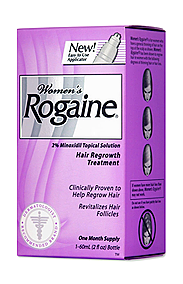 Rogaine for women is a different product than Rogaine for men. It contains 2% minoxidil instead of the 5% minoxidil found in the men's formulation. The inactive ingredients of Rogaine are purified water, propylene glycol, and alcohol.
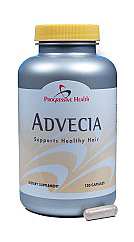 Advecia is an all-natural hair loss supplement. Therefore, it is safe and well-tolerated. It is also effective for improving hair growth.